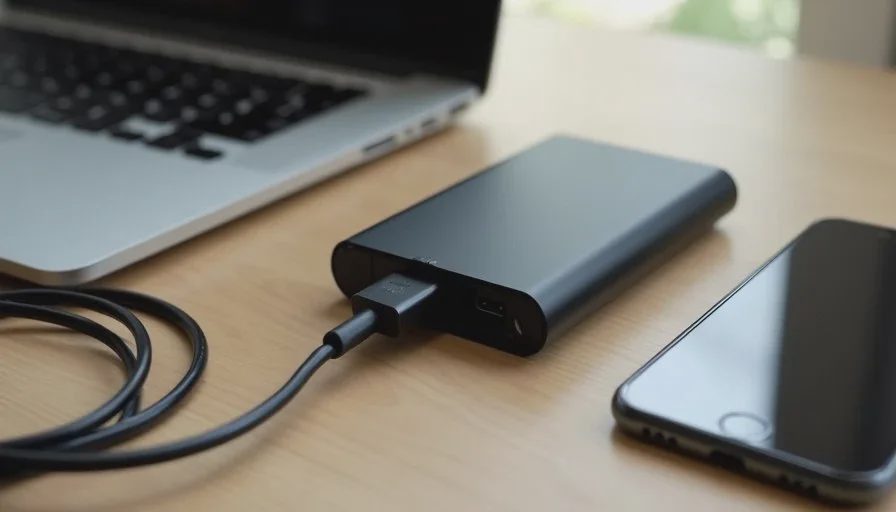
I bought the power bank because battery anxiety had become a low-level daily companion. Phone charge would dip during a long stretch of messages and maps. The laptop would sit near 30 percent by late afternoon on hybrid days. A compact power bank seemed like the obvious fix. The specifications looked solid, the size appeared pocketable, and the early reviews were encouraging.
I used it for a full month of real commuting, office days, and the usual forgotten-cable moments. The goal was the same one I apply to every accessory: decide whether it earned a permanent place or whether the early friction outweighed the benefit. This is what the month actually revealed.
Why I Wanted One in the First Place
The pattern was familiar. I would leave home with both devices charged. By mid-afternoon the phone would be lower than expected after navigation, messages, and the occasional hotspot. On longer days the laptop needed a top-up before the final meetings. Carrying the full laptop charger every day felt excessive. A single power bank that could rescue the phone and give the laptop a short boost looked like the cleaner solution.
I chose a model in the common mid-capacity range—large enough to matter, small enough that I would not leave it at home. It came with the usual claims: multiple ports, enough wattage for a phone and a modest laptop boost, and a body that looked travel-friendly.
The First Week Felt Promising
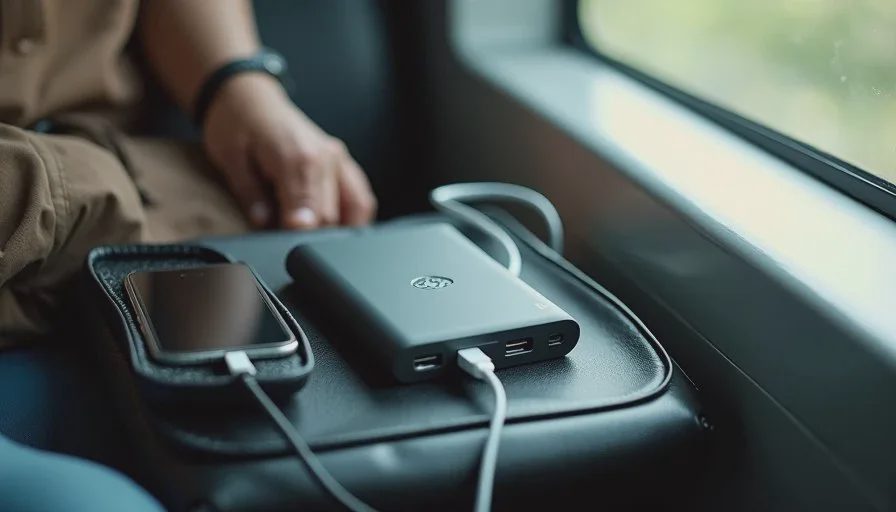
Early use was straightforward. The power bank topped up the phone during a commute without drama. It gave the laptop enough charge to finish a work block when an outlet was inconvenient. The size fit in the same bag pocket as the daily charger. I liked the simplicity of having one extra battery that covered both devices.
That first-week satisfaction is common. Most power banks feel useful while the novelty is high and the tests are short. The more informative period begins once the device becomes part of the ordinary routine and the small frictions have time to appear.
What Started to Surface by Week Two and Three
Size Versus Actual Carry
The power bank was described as compact. In the bag it occupied more continuous space than I expected. It was not heavy, but its rectangular bulk made the pocket feel tighter. On days when I carried less I started leaving it behind. A power bank that stays at home is not solving battery anxiety.
Cable Dependence
The unit required its own cable. When I forgot that cable—or when it was already in use—the power bank became inert weight. I had assumed I could rely on the laptop cable or a short spare. In practice the right cable was missing often enough to become a recurring note. The more self-contained the charging system, the more likely it is to be used.
Real-World Capacity Versus Claims
On paper the capacity looked sufficient for multiple phone charges and a meaningful laptop top-up. In mixed real use—phone navigation, messages, and a partial laptop boost—the numbers were more modest. It still helped. It simply did not stretch as far as the optimistic reading of the specifications had suggested. That gap is common and not unique to this model, but it affected how often I felt the need to recharge the power bank itself.
Heat and Port Behavior
During higher-wattage output the body grew warmer than I preferred in a closed bag pocket. The ports also required a firm seating of the cable; a slightly loose connection interrupted charging once or twice before I noticed. Neither issue was dramatic. Both added small moments of attention that a truly invisible accessory should not require.
The Keep-or-Return Notes From the Month
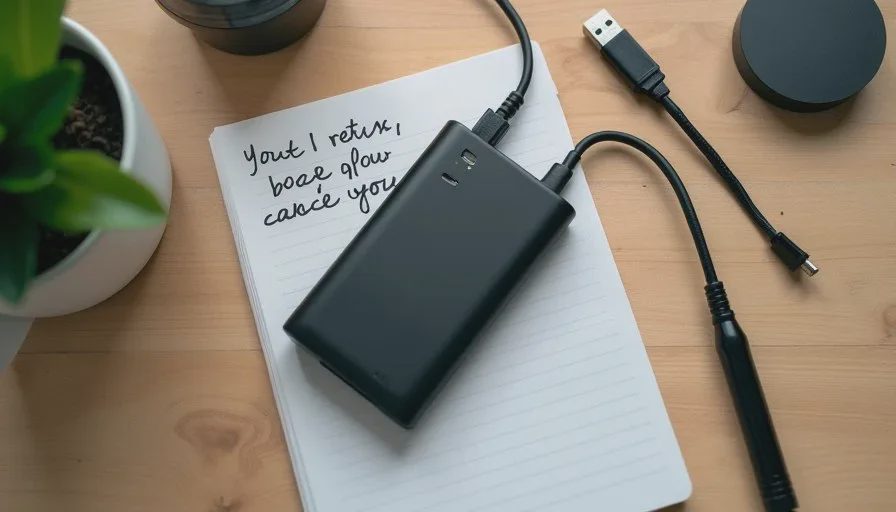
My phone notes stayed short:
“Bulkier in the bag than expected—left behind twice.”
“Needs its own cable; forgot it on Thursday.”
“Phone top-up solid; laptop boost smaller than hoped.”
“Warm after higher-output use.”
By the end of the month the pattern was consistent. The power bank solved real problems on the days I carried it and remembered the cable. It created enough minor friction that I did not carry it every day. An accessory that is only present some of the time delivers only partial relief from the anxiety it was meant to remove.
What I Learned About Power Banks for Daily Carry
Capacity numbers are less important than the combination of size, cable practicality, and output that matches the devices you actually need to rescue. A higher-capacity unit that stays at home is less useful than a smaller one that travels every day.
Cable strategy matters more than most product pages acknowledge. A power bank that can accept the same cable you already use for the laptop or phone reduces the number of items that must be remembered. Separate proprietary or easy-to-forget cables become a recurring failure point.
Heat and port reliability only reveal themselves under repeated real conditions. Short tests at a desk hide the behavior that appears inside a bag during a commute or a long afternoon.
The most practical power bank is the one that becomes automatic. It lives in the same pocket, uses a cable already in the system, and delivers enough charge to remove the anxious glance at the battery icon. Anything that requires extra decisions or extra remembering tends to slide out of the routine.
How I Decide What Stays
I use the same three questions I apply to every keep-or-return test:
Does it still feel worth the space after the novelty fades?
Have any early irritations grown or resolved?
Do I ever choose to leave it behind on purpose?
In this case the answers leaned negative enough that the power bank did not earn permanent daily-carry status. I kept it for longer travel days and specific situations where I know outlets will be scarce. For ordinary commuting and office days I returned to a simpler approach: a full charge in the morning, a reliable multi-port charger at the desk, and acceptance that the phone can use battery-saver settings when needed.
That is not a failure of the product so much as a mismatch with the exact routine I asked it to join. Other people with longer commutes or fewer charging opportunities may reach the opposite conclusion with the same device. The value of the month-long test is that it replaces speculation with observed behavior.
Practical Advice If You Are Considering One
Measure the space in the bag or pocket where the power bank will actually live. Specifications list dimensions; daily carry reveals whether those dimensions feel acceptable.
Decide in advance which cable will travel with it and treat that cable as part of the system. A power bank without its cable is just weight.
Test it under the same conditions you will use it—commute length, mixed phone and laptop needs, bag versus pocket. Desk tests are too gentle.
Give it two to four weeks of real use before you decide it is permanent. Early satisfaction is common. Sustained, automatic use is rarer and more informative.
Consider whether a better daily charging habit or a more capable multi-port desk charger might remove more anxiety than an extra battery you have to remember. Sometimes the simpler system wins.
What Still Earns a Place in the Bag
The accessories that survive long-term testing share a quiet quality: they reduce friction without adding management. A power bank that is small enough to forget about, paired with a cable already in the bag, and capable of the exact top-ups you need will stay. A power bank that requires its own planning tends to become occasional-use gear.
I have kept smaller, lower-capacity units because they traveled every day without complaint. I have returned larger, more capable ones because they became the item I left on the shelf. Real carry behavior is the only ranking that matters once the specification sheet is put away.
Final Thought
A power bank can remove a genuine daily irritation. It can also introduce new ones that only appear after weeks of commuting and the ordinary chaos of forgotten cables. The only reliable way to know which outcome you will get is to live with the device under real conditions and pay attention to the small signals.
After a month the power bank I tested proved useful on the days it traveled and mildly annoying on the days it did not. That was enough to keep it for specific trips and remove it from the everyday bag. The decision was not dramatic. It was practical.
A good device should make your day easier, not louder. A power bank that needs constant remembering or creates its own small problems is not yet meeting that standard. The ones that disappear into the routine and simply keep the battery icon from becoming a source of stress are the ones worth keeping.



No comments yet.