I used to leave the house with a small collection of chargers. One for the laptop. One for the phone. Sometimes a third for earbuds or a tablet. By the end of the week the bag felt heavier than it needed to be, and I still occasionally arrived somewhere without the right cable. The extra gear did not create more reliability. It created more decisions and more chances to leave something behind.
After years of watching customers buy chargers on the sales floor and then living with the same problem in my own work and travel, I simplified. I now pack far fewer chargers, but the ones I carry actually get used. The goal is simple: enough power for a normal workday and ordinary travel without turning the bag into a cable drawer.
Here is what I actually pack and why the rest stays home.
What Makes a Charger Worth Carrying
A charger earns its place in the bag by solving more than one problem at once. It should handle the laptop and the phone without requiring a second brick. It should be compact enough that weight and bulk do not become reasons to leave it behind. The cable should be long enough for real desks, airplane trays, and hotel nightstands. And it should be reliable enough that I stop thinking about it.
Many chargers fail one of those tests. Single-port laptop chargers force you to carry a second brick for the phone. Ultra-compact designs sometimes use cables so short that the laptop has to sit awkwardly close to the outlet. High-wattage models that look impressive on paper can be bulkier than the real workload requires. The chargers that stay in my rotation pass the daily-use test rather than the spec-sheet test.
The Core Charger for Work and Everyday Carry
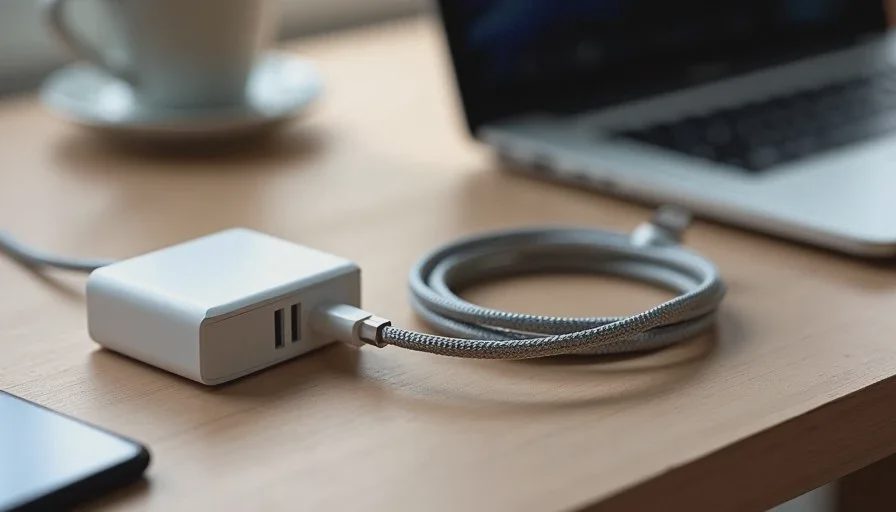
For ordinary office days and hybrid schedules I carry one multi-port charger that can power the laptop and top up the phone at the same time. The wattage is high enough for the laptop under normal loads and still leaves capacity for the phone. Two ports are enough. More ports sound useful until you realize you rarely need them and the extra size starts to matter.
Cable length is the detail most people underestimate. A short cable forces the laptop into a cramped position near the wall outlet. A cable that reaches comfortably across a desk or a café table removes a small daily irritation. I prefer a braided cable that resists tangling and still flexes easily. After a few weeks of real use the difference between a cable you fight and a cable you forget about becomes obvious.
This single charger covers the majority of my workdays. It lives in the same pocket of the bag so I never have to hunt for it. When the setup is this simple, the charger actually comes with me instead of staying on the desk at home.
The Travel Charger That Earns Its Place
Travel adds different constraints. Outlets can be scarce or awkwardly placed. Airplane seats and hotel desks rarely give you ideal cable runs. Security lines and packed bags reward anything that is compact and dual-purpose.
For trips I still rely on the same multi-port charger when possible. If the itinerary is light and I know the laptop will spend most of its time on battery, I sometimes switch to a smaller phone-focused charger and accept that the laptop will use hotel or office outlets when needed. The decision depends on how many hours I expect to work away from a reliable desk.
I no longer pack a separate high-wattage laptop-only charger unless the trip involves long stretches of heavy use with limited access to power. The extra brick rarely justifies its weight for ordinary business or personal travel. One capable multi-port charger plus a short backup phone cable covers almost every situation I actually encounter.
What Stays Home on Purpose
Single-port laptop chargers that cannot also charge the phone stay home. They create the exact problem I am trying to eliminate: two bricks instead of one.
Ultra-short cables stay home. They look tidy in product photos and become annoying the moment the outlet is not perfectly placed.
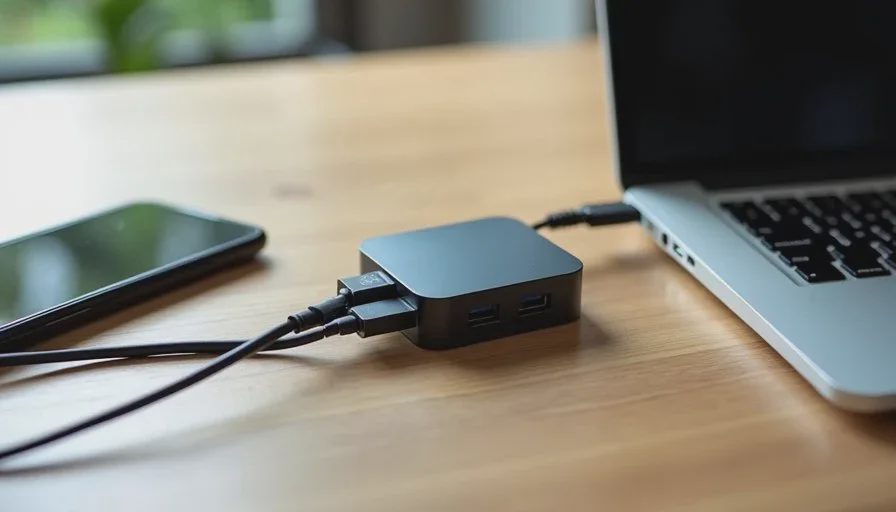
Chargers with four or five ports stay home unless I am setting up a temporary desk for several days. The extra ports add size and weight for capacity I almost never use on the move.
Novelty foldable plugs and complicated modular systems stay home. They solve edge cases I do not have and introduce new failure points. Simple and reliable beats clever when the charger has to work in a hurry.
How I Test Whether a Charger Deserves a Permanent Spot
I use the same day-10 filter I apply to every other piece of gear. After a week or two of real carrying I look for quiet signals.
Does the charger still feel worth the space in the bag?
Do I ever leave it behind because it is bulkier than expected?
Does the cable length create daily workarounds?
Does the phone or laptop ever feel under-powered during normal use?
If the answers start turning negative, the charger loses its place. The ones that remain are the ones I stop noticing because they simply work. That is the standard. A charger should remove friction, not become another item that requires management.
Practical Packing Habits That Make the Difference
I keep the daily charger in the same bag pocket every time. Decision fatigue is real when you are rushing out the door. A fixed location means the charger comes with me by default.
I carry one short USB-C cable as a backup in a different pocket. It weighs almost nothing and covers the rare case when the main cable is in use or left at a desk.
I no longer pack a charger for every device. Earbuds and the tablet charge from the same multi-port brick or from the laptop itself when needed. Reducing the number of separate charging systems is more effective than adding more specialized ones.
On longer trips I check the room layout once and then stop rearranging. A cable that reaches the nightstand or the desk without stretching removes the nightly puzzle of how to position everything.
Common Mistakes I Still See
People buy the highest-wattage charger available and then discover it is larger than their real needs require. People buy the smallest possible charger and then fight short cables every day. People carry three chargers “just in case” and still forget the one they actually need.
The pattern is the same one I saw on the sales floor. The impressive specification wins the moment of purchase. Daily friction decides whether the item stays in the bag six weeks later.
Another frequent issue is mixing cable standards until the bag contains several nearly identical cables that only work with specific devices. Simplifying to one primary cable type reduces the chance of grabbing the wrong one when you are in a hurry.

What a Good Charging Setup Feels Like After a Month
The setup that survives is almost boring. One multi-port charger. One reliable cable of useful length. A short backup cable. Everything lives in predictable places. The laptop and phone both reach full charge overnight without rearrangement. On the road the same charger handles both devices without requiring a second brick.
There is no drama and no constant decision-making. That is the point. Charging should be background infrastructure, not a daily puzzle. When the system is simple enough that you stop thinking about it, the charger has done its job.
I have returned compact chargers that looked perfect online because the cable was too short for real desks. I have kept slightly larger multi-port models because they eliminated the second brick and still fit easily in the bag. Real use decides. Specs only get you to the first week.
Final Thought
The chargers worth packing are the ones that reduce the total number of items you need to remember while still covering the devices you actually use. For most work and travel that means one capable multi-port charger with a cable long enough for ordinary spaces, plus a minimal backup. Everything else is optional and often counterproductive.
A good device should make your day easier, not louder. The same rule applies to the charger that keeps it running. Choose the setup you will still be happy to carry after the novelty wears off. That is the one that actually improves workdays and trips instead of adding to the weight of the bag.



No comments yet.